
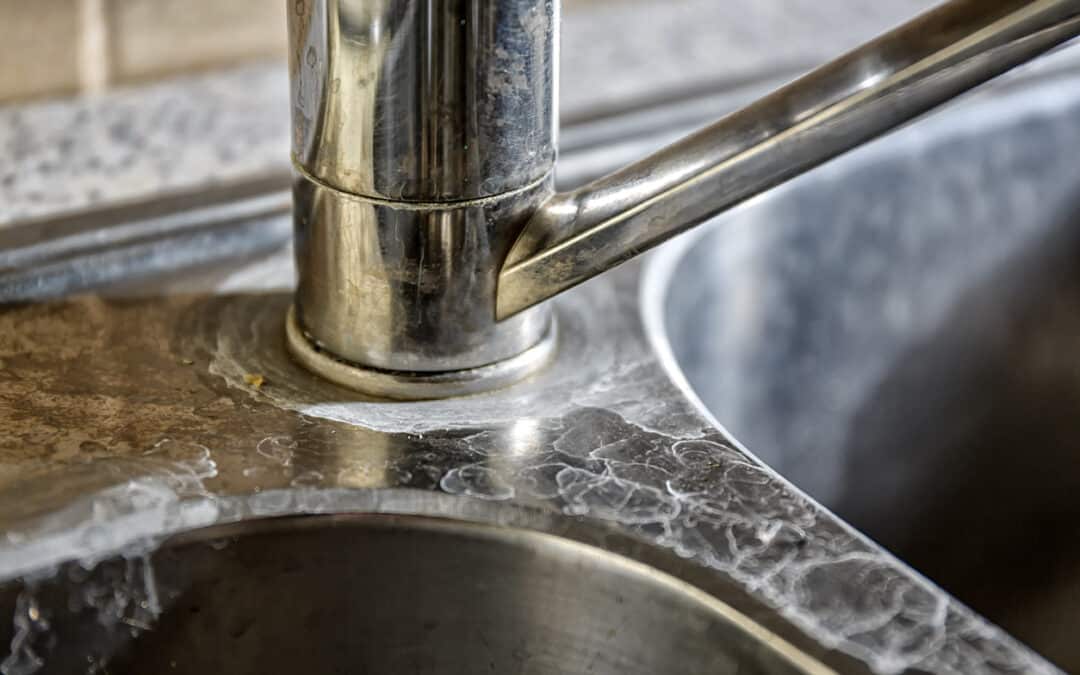
Spotty dishes, stiff towels, dry skin, soap scum in the tub, and having to use a ton of soap to get any suds are all signs of one thing in the Kansas City area: hard water. The best solution to this problem is a quality water softener. But what does a water softener do?
Lutz Plumbing is very familiar with this question, as we’ve heard it many times while installing and servicing these devices for decades. In this post, we’ll explain the most common questions about what a water softener does, how it works, and how it will benefit your home and family.
First, What is “Hard Water”?
Let’s start by looking at exactly what hard water is. It’s not a dangerous situation, but it can harm your home and be a nuisance to deal with.
Hard water is water that has dissolved minerals in a high concentration, usually calcium or magnesium. This happens as rainwater passes through the earth, picking up these dissolved minerals in the process.
The problem with hard water is that those minerals can then deposit in your pipes, on your faucets, and in your fixtures, limiting water flow and requiring a lot of extra cleaning to keep up with. Water softeners remove those minerals, as we’ll discuss next.
How a Water Softener Works: The Science of Ion Exchange
A water softener is kind of like a magnet, in that it pulls the dissolved minerals from your water, but it also substitutes other compounds into your water as part of the process.
The Resin Bed
Water softener tanks are filled with tiny resin beads that are covered with sodium (salt) or potassium (electrolyte) ions. Water is introduced into the top of the tank and allowed to flow through these beads.
The Exchange
As the hardened water passes through the resin beads, the sodium or potassium ions act as a magnet, pulling the positively-charged minerals out of the water. With the minerals captured, sodium or potassium ions are released in their place.
The Regeneration Cycle
So what happens to the dissolved minerals that are stuck to the resin beads? Periodically, the water softener will flush the collected minerals down the drain and will then recharge the beads with salt or potassium from its brine tank.
The Top 3 Benefits of Soft Water
Protects Your Plumbing and Appliances
Because your water softener removes minerals from your water, soft water protects your plumbing and your appliances. Scale buildup from hard water can ruin your water heater, dishwasher, coffee maker, and similar appliances that use water.
Saves You Money
Soft water also saves you a lot of money, partially because it’s much easier on your appliances that use water, but that’s not the only savings you’ll see. For cleaning, you’ll use less shampoo, soap, and detergents in the process, allowing you to save money through lower usage.
Better for Your Skin and Hair
The minerals in hard water make it harder to get your skin and hair clean, requiring additional rinsing that can be very drying. There’s a noticeable difference in your skin and hair after you’ve changed over to soft water.
Conclusion
Now that you know what does a water softener do, you know that it removes damaging minerals from your home, saves you money, and improves your life. If you’re ready to get rid of your hard water, Lutz Plumbing’s team can help! Contact us today for a consultation.