
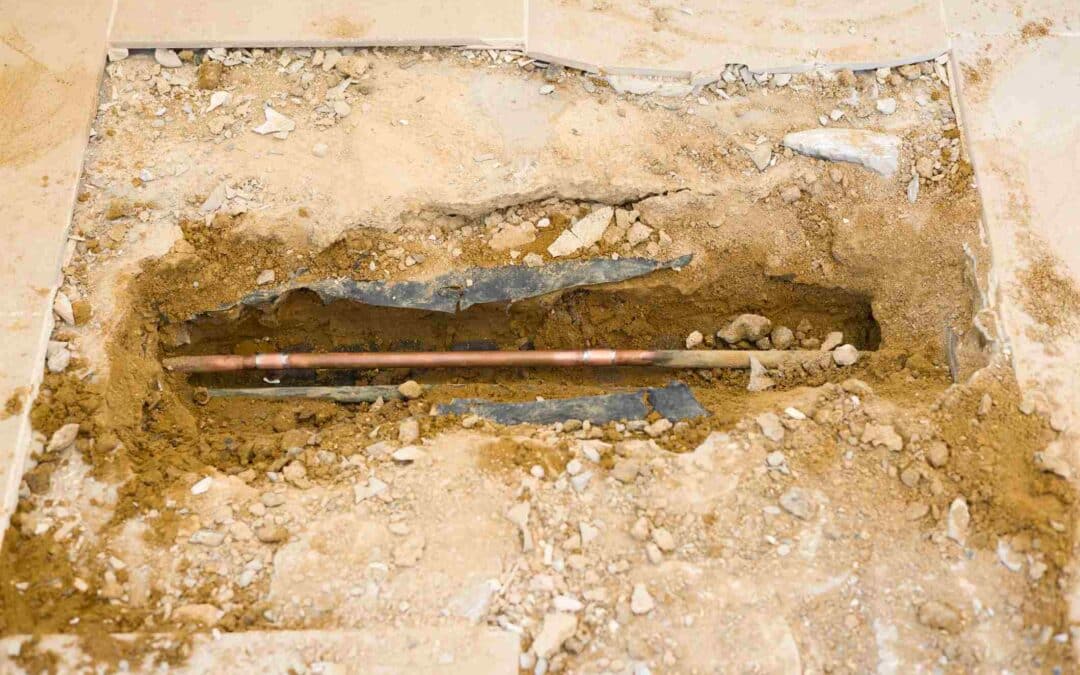
A home’s foundation is designed to be permanent, but the pipes running beneath it are not. For many homeowners, the phrase “slab leak” sounds like a structural nightmare. While it is a serious plumbing issue, it doesn’t have to be a financial catastrophe if you know how to detect slab leaks before they cause major damage.
The difference between a simple plumbing repair and a multi-thousand-dollar restoration project comes down to one thing: early leak detection.
In this article, we will break down what a slab leak is, the subtle warning signs you’re likely missing, and the steps you can take today to protect your home’s foundation and your wallet.
What Exactly is a Slab Leak?
Most modern homes are built on a “slab-on-grade” foundation. This means your house sits on a thick layer of concrete, with your primary water and sewer lines buried deep within or directly underneath that concrete.
A slab leak occurs when one of these copper or PEX pipes develops a hole, crack, or corrosion. Because the leak is happening beneath inches of reinforced concrete and flooring, you won’t see a puddle immediately. Instead, the water slowly saturates the soil, creates pressure against the concrete, and eventually works its way into your living space.
Pro Tip: Not sure if you have a leak? Check your water meter. Turn off every faucet in the house and watch the meter for 15 minutes. If the dial moves at all, you have a leak.
Why Do They Happen?
- Soil Shifting: As the earth expands and contracts with the seasons, it puts pressure on the pipes.
- Electrolysis: A chemical reaction between the metal pipes and the minerals in the soil can cause “pitting” or pinhole leaks.
- Age: Older copper pipes eventually thin out and fail.
- Poor Installation: If a pipe was nicked or improperly wrapped during construction, it’s a ticking time bomb.
7 Warning Signs You Have a Slab Leak
Because you can’t see the pipes, you have to listen to what your house is telling you. If you notice even one of these signs, it’s time to call in the professionals.
1. The Mystery Spike in Your Water Bill
If your water usage habits haven’t changed (no new guests, no filling the pool), but your monthly bill is creeping upward, water is escaping somewhere. A pinhole leak can waste hundreds of gallons a day.
2. Warm Spots on the Floor
If you’re walking barefoot across your tile or laminate and suddenly feel a patch of floor that feels unusually warm, you likely have a leak in a hot water line. The water is heating the concrete from below, which then radiates through your flooring.
3. The Sound of Running Water
When the house is silent, listen closely near your bathrooms or kitchen. Do you hear a faint hissing, rushing, or whistling sound? If no faucets are on and the toilet isn’t running, that sound is likely water escaping a pressurized pipe under your feet.
4. Foundation Cracks or Heaving
Water saturating the soil under your home causes it to swell. This pressure can actually lift the concrete slab (known as “heaving”). Look for:
- New cracks in the drywall or ceilings.
- Doors that suddenly stick or won’t close.
- Visible cracks in the exterior brick or foundation.
5. Persistent Dampness or Mold
Moisture from a slab leak will eventually travel upward. If you notice damp carpets, warped hardwood, or a “musty” smell that won’t go away despite cleaning, there is a moisture source beneath you. Mold can begin growing under floorboards long before you see it on the surface.
6. Standing Water Outside
If it hasn’t rained recently but you have a “swampy” patch in your yard right next to the foundation, the water from a slab leak may be forced outward toward the perimeter of your home.
7. Low Water Pressure
A significant break in the line under the slab will cause a noticeable drop in water pressure throughout the house, as a portion of the flow is being diverted into the dirt.
Why Ignoring a Slab Leak Is a Major Risk
We understand the temptation to wait and see. However, a slab leak is a progressive problem. It does not stabilize; it only worsens.
| Risk Factor | Impact of Delay |
| Structural Integrity | Water erodes the soil supporting your home, leading to foundation collapse or sinkholes. |
| Home Value | Unaddressed foundation issues can decrease a home’s resale value by up to 20%. |
| Health Risks | Mold and mildew thriving under the floors can trigger asthma and respiratory issues. |
| Repair Costs | A $500 detection and repair job can quickly turn into a $20,000 whole-home flooring and foundation restoration. |
How Lutz Plumbing Finds the Leak (Without Tearing Up Your Floors)
Years ago, plumbers had to use “guess-and-check” methods, which involved jackhammering holes in the floor to find a leak. Those days are over. At Lutz Plumbing, we use non-invasive leak detection technology to pinpoint the exact location of the break.
Our Diagnostic Process:
- Sonic Detection: Using high-sensitivity microphones to “listen” through the concrete for the sound of escaping water.
- System Pressure Testing: Identifying whether the leak is on the hot or cold water line.
- Thermal Imaging: Using infrared technology to see heat signatures and water pooling beneath your flooring.
- Electronic Sensors: Utilizing specialized sensors to track leaks in a way that protects your home’s surfaces.
Professional Repair Solutions
Once we’ve located the leak, we offer several ways to fix it, depending on the age of your pipes and the location of the break.
- Spot Repair: We open a small, targeted area of the slab to repair the specific section of the pipe.
- Rerouting: If your pipes are old, we can abandon the leaking line under the slab and run a new line through your walls or attic. This is often the preferred “permanent” fix.
- Pipe Lining: In some scenarios, we can apply an epoxy coating to the inside of the pipe to seal leaks without any digging at all.
Why Early Slab Leak Detection is Your Best Investment
A slab leak is a race against time. By catching the signs early, the warm floor, the high bill, or that faint, persistent hiss, you can save yourself from the massive expense of structural foundation repair.
Lutz Plumbing has been the trusted name in foundation and slab leak services for years. We combine old-school expertise with modern technology to ensure your home stays dry and your foundation stays solid. When you suspect a leak, don’t wait for the damage to spread. Schedule a professional inspection and protect your home’s future today.
Frequently Asked Questions About Slab Leaks
1. Does Homeowners Insurance Cover Slab Leak Repairs?
In most cases, homeowners’ insurance covers the “tear out” and the restoration of your home (like replacing damaged flooring or drywall), but it often does not cover the actual repair of the plumbing pipe itself. However, every policy is different. At Lutz Plumbing, we can provide the detailed documentation your insurance adjuster needs to process your claim efficiently.
2. How Long Does It Take to Fix a Slab Leak?
The timeline depends on the repair method. A direct “spot repair” usually takes 1 to 2 days, including the time to break through the concrete and patch it back up. If we are rerouting the pipes through the attic or walls to avoid future under-slab issues, it may take 2 to 3 days. We always prioritize getting your water back on as quickly as possible.
3. Can I Just Leave a Small Slab Leak Alone if It Isn’t Causing a Puddle?
No. Even a tiny pinhole leak can wash away the soil beneath your foundation, leading to a “void.” Once a void forms, your concrete slab loses its support and can crack or collapse under the weight of your home. What starts as a plumbing fix can quickly turn into a much more expensive foundation leveling project.
4. Will You Have to Tear Up My Entire Floor to Find the Leak?
Not at all. Thanks to our advanced equipment, we can pinpoint the leak to a very specific area. If we perform a spot repair, we only need to remove a small section of flooring and concrete. If we choose to reroute the pipes, we may not have to touch your floors at all.
5. Are Certain Types of Pipes More Prone to Slab Leaks?
Older homes with copper piping are the most common victims of slab leaks due to corrosion and electrolysis. However, even newer homes with PEX piping can experience leaks if the lines were kinked during installation or if the house experiences significant settling. Regular inspections are the best way to monitor any pipe material.